Series: “The Business of Cartels” - Part 2: The Business Model
The Business of Cartels
Part 2: The Business Model
Strip away the violence for a moment and look at a cartel the way an analyst would look at any company. What does it produce? What does that cost to make? How does it get to market? Where else does it make money? A mature cartel is a vertically integrated commodity business with a logistics arm, a pricing structure driven by risk rather than scarcity, and a habit of expanding into whatever adjacent market still takes cash.
The Farm-Gate Price
Cocaine starts as coca leaf, grown mostly in remote parts of Colombia, Peru, and Bolivia, in places where the state has little presence and farmers have few legal ways to make a living. In Colombia alone, an estimated 130,000 farming families grow coca on small plots. The leaf itself is worth very little. A farmer might clear a bit over $1,200 a month selling raw leaf at roughly a dollar a kilo. It takes about 125 kilos of coca leaf to produce one kilo of finished cocaine. Farmers or local chemists soak the dried leaves in gasoline for eight to twelve hours to pull out the alkaloid, then process that base through several more chemical steps using sulfuric acid, limestone or ammonia, and acetone. By the time coca paste has become a standardized, sealed kilo brick, ready for a trafficker to buy, the value has jumped from roughly $137 worth of raw leaf to somewhere around $2,000 to $2,400. Compared to what that same kilo eventually sells for abroad, this is almost nothing.
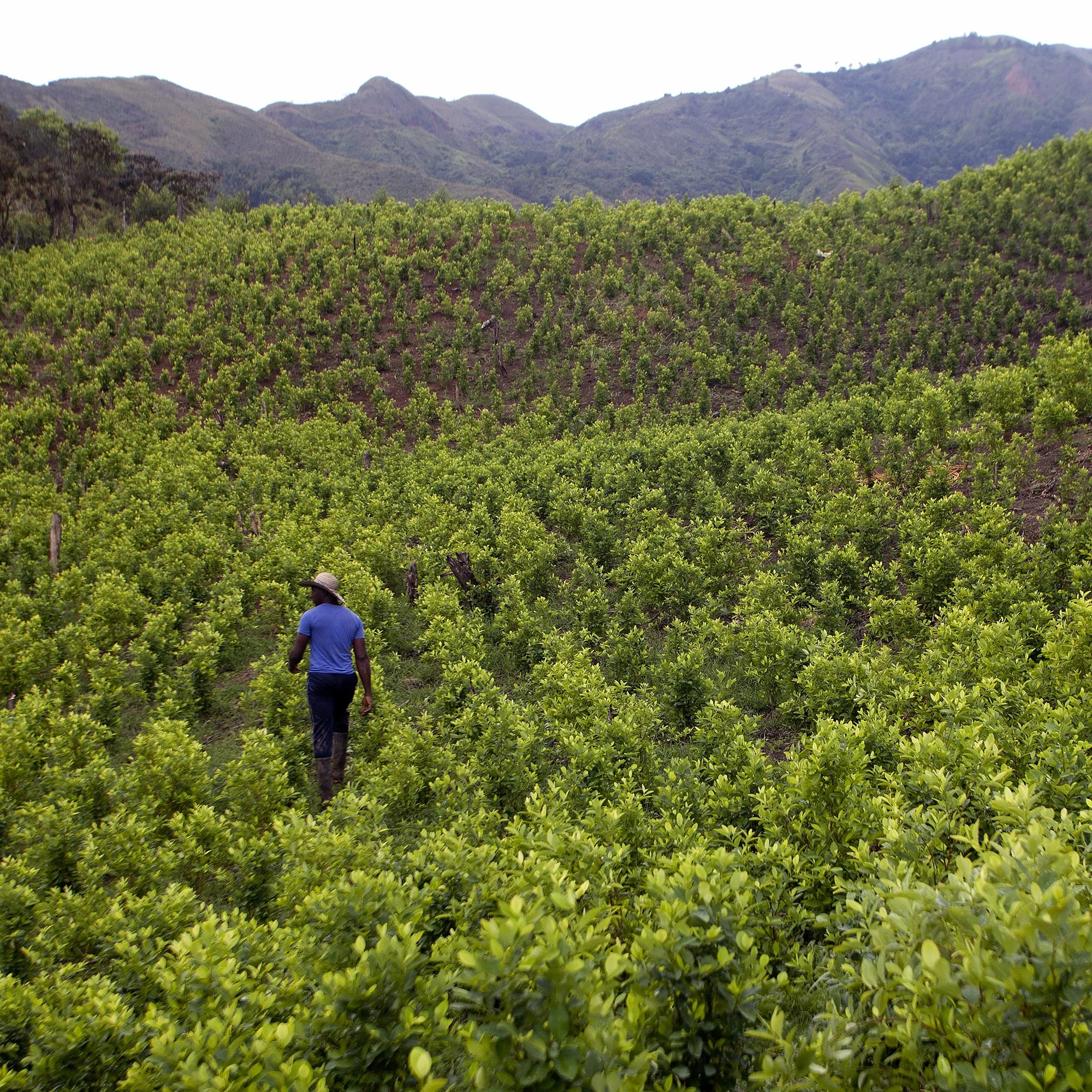
Coca Farm in Colombia
From Jungle Lab to Street Corner
What happens after export is really a study in how much of a drug's final price is risk premium rather than production cost. A kilo bought at the export stage in Colombia for $2,000 to $2,400 might sell wholesale in a U.S. city for $14,000 to $19,000. Break that same kilo into ounces for mid-level distribution and the pure-equivalent value climbs past $27,000. By the time it's been cut with adulterants and sold in gram quantities on the street, that kilo has generated somewhere between $60,000 and $80,000 in the U.S. In Australia it can top $200,000. (Data is from a published article in 2009. It should not be taken as current real world data.)
The jumps in price track the jumps in risk. Moving a shipment across an international border costs more than moving it across a city because a border crossing is where seizure and arrest risk spikes, not because the physical logistics are more difficult. Coca-growing countries end up capturing only a fraction of the retail value of the drug they produce. The money in this business belongs to whoever controls the corridor between production and consumption, which is part of why power shifted from Colombia to Mexico in the first place, as Part 1 covered. Producers get paid a commodity price. Traffickers who control the route into the U.S. get paid for the risk.
Cocaine rarely moves in one straight shot from South America to the U.S. anymore. It typically travels north through Central America and Mexico in stages, small loads by courier, larger shipments by boat or plane, and increasingly by semi-submersible vessels built specifically to slip past radar. Kilo bricks get stamped with a seal identifying which organization produced them. It's a strange bit of standardization for a black market, but it lets buyers and sellers who've never met verify whose product they're handling, much like a manufacturer's trademark would.
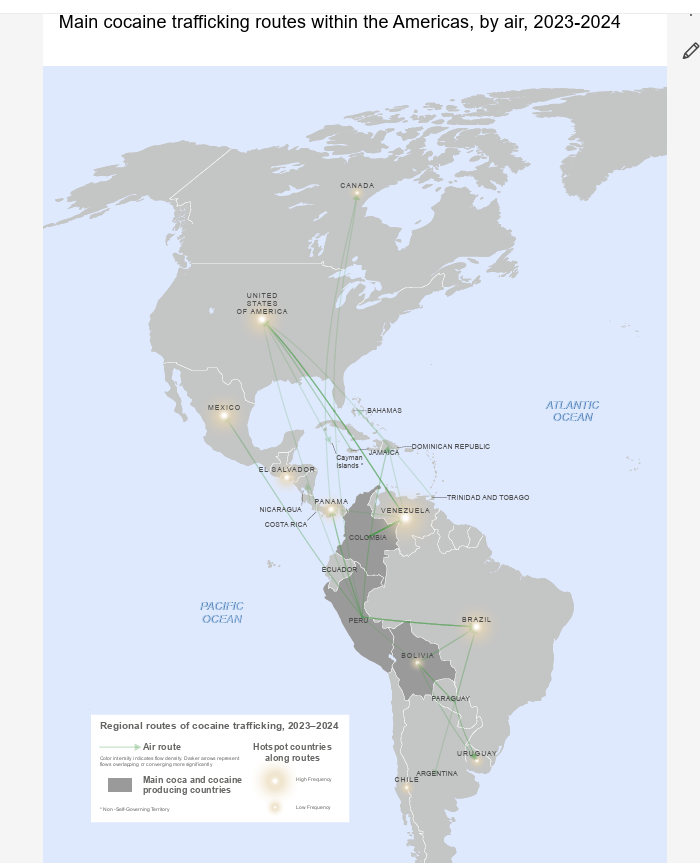
Main cocaine trafficking routes within the Americas, by air, 2023-2024
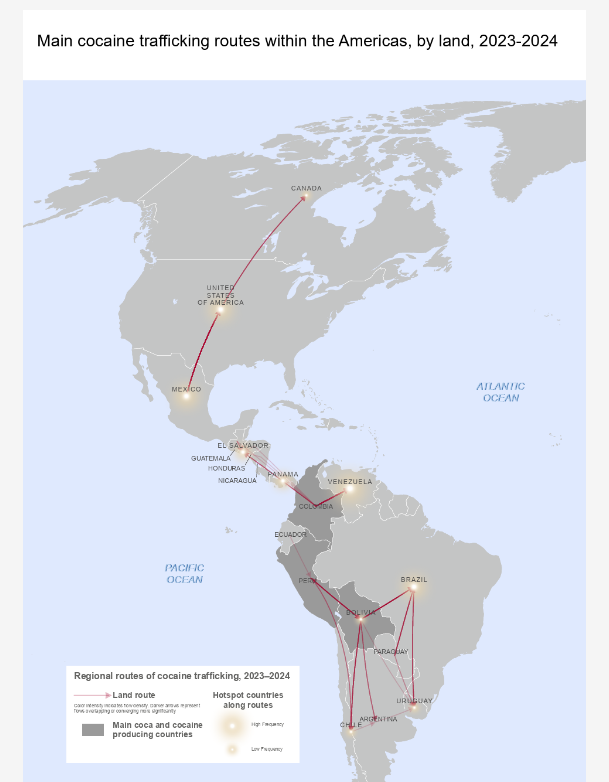
Main cocaine trafficking routes within the Americas, by land, 2023-2024
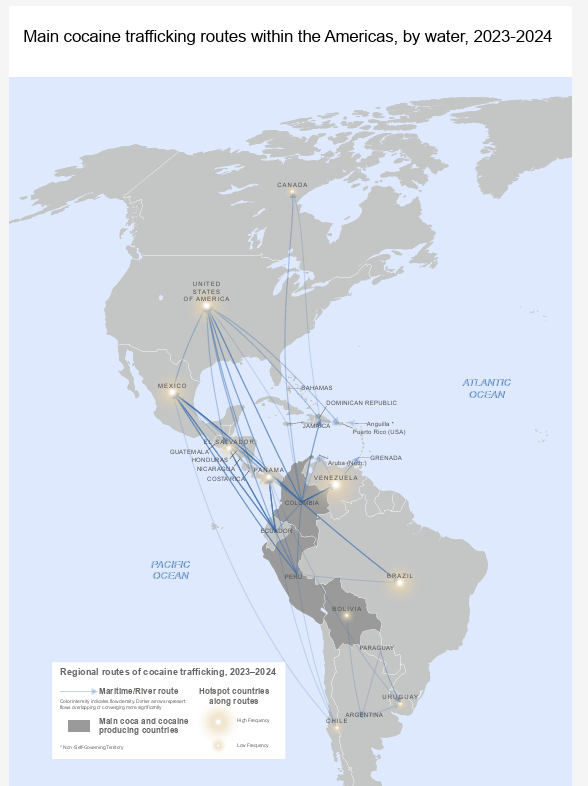
Main cocaine trafficking routes within the Americas, by water, 2023-2024
A Franchise, Not a Chain of Command
Movies and TV have sold a common misconception, that a cartel functions like a single company with one boss directing every stage from jungle lab to street dealer. Most operate closer to a franchise model. A cartel controls supply and the trafficking route, but retail distribution in a U.S. city is usually handled by local networks, street gangs, and independent dealers who buy wholesale and run their own end of the business with a fair amount of autonomy. The cartel's core operation stays upstream, in production, transportation, and wholesale distribution to and past the border. What happens on a street corner in Chicago is somebody else's problem, and somebody else's margin. That structure does something useful for cartel leadership: it keeps them insulated from the part of the business most exposed to law enforcement. Arrest a street dealer and almost nothing upstream is disrupted. Arrest the boss of a border plaza and you've hit an actual choke point.
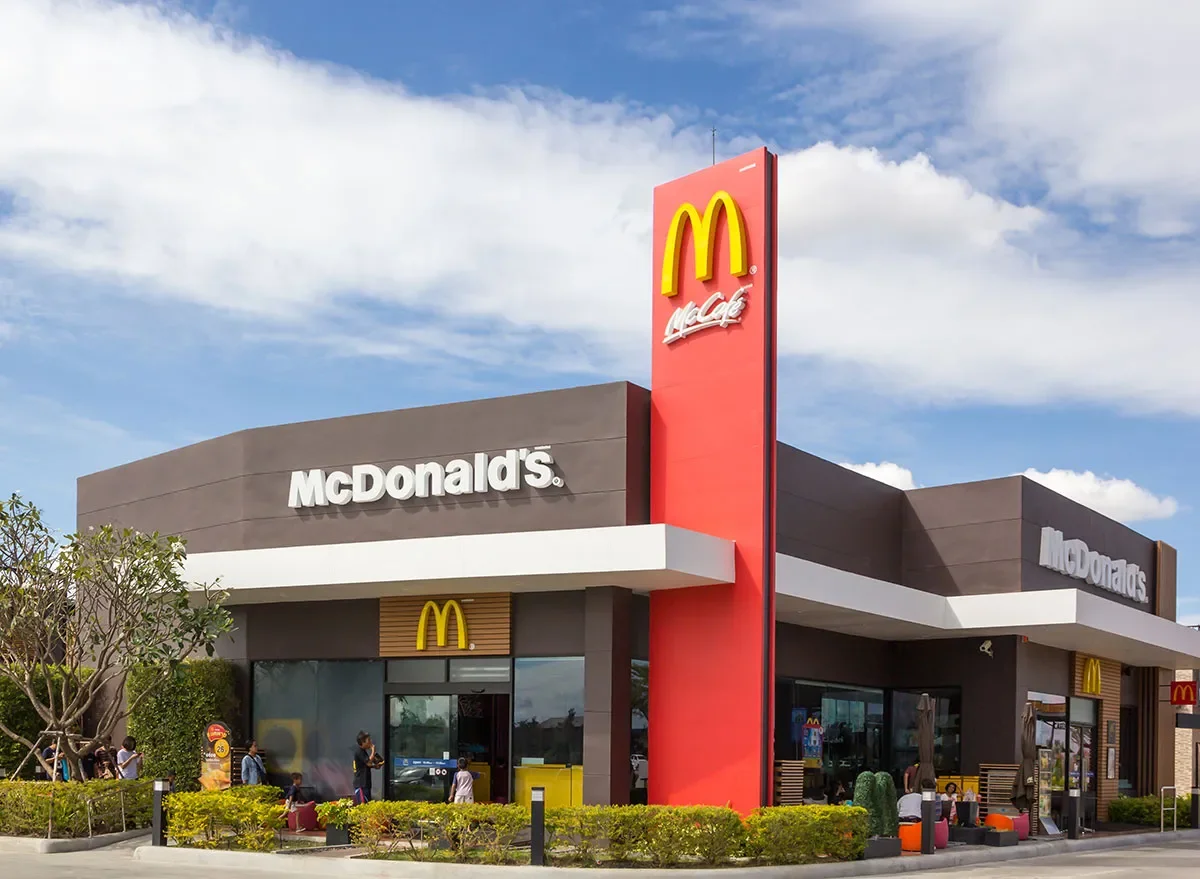
The local McDonald’s in your town is the equivalent of a local street drug dealer selling in grams. They are retail, they are local, and they are your everyday go-to spot for your product. Behind McDonald’s, though, there is a much larger network of businesses that makes the local franchise in your area possible. When you start thinking of the El Chapos of the world as business men and not just some guy on a wanted poster that sold some dope you can understand how these organizations and people tick.
Beyond the Product
Over roughly the last fifteen years, cartels have diversified, and that's the clearest evidence that they operate as businesses rather than as purely ideological or violent groups. A company that sells one product is exposed every time that market gets disrupted, by law enforcement, by a rival cutting into market share, or by a plain price collapse. Mexican cartels have responded by moving into businesses that have nothing to do with narcotics.
Fuel theft. Known in Mexico as huachicol, stealing crude oil and refined fuel from the state oil company Pemex has become one of the largest non-drug revenue sources for Mexican cartels, according to U.S. Treasury officials, with the Jalisco New Generation Cartel (CJNG) running a particularly organized version of it. The scheme works both directions across the border. Cartels tap pipelines, hijack tanker trucks, and steal directly from refineries inside Mexico, then sell the stolen fuel domestically through cartel-linked gas stations or smuggle it into the U.S. mislabeled as waste oil. Going the other way, they buy fuel legally in the U.S. and smuggle it into Mexico to dodge import taxes, undercutting the legitimate market. One group, the Cartel Santa Rosa de Lima, leaned so heavily into huachicol that it largely stopped trafficking narcotics. When a criminal organization abandons its original business for a side hustle, the side hustle has become the real business.
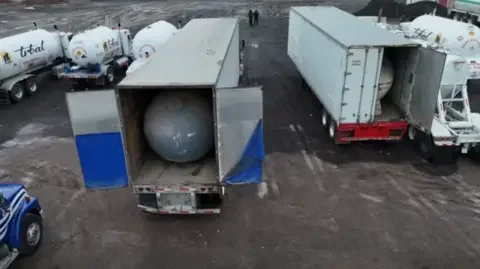
Fuel Theft and Smuggling
Human smuggling. Cartels that control territory along migration corridors have increasingly treated migrants as a second commodity moving through the same infrastructure built for drugs, per U.S. State Department trafficking reports. In a lot of cases, nobody crosses cartel-controlled territory without paying a fee, whether they're smuggling narcotics or just trying to reach the U.S. border. It costs the cartel almost nothing to add, since the route, the corrupted officials, and the enforcement muscle are already in place.
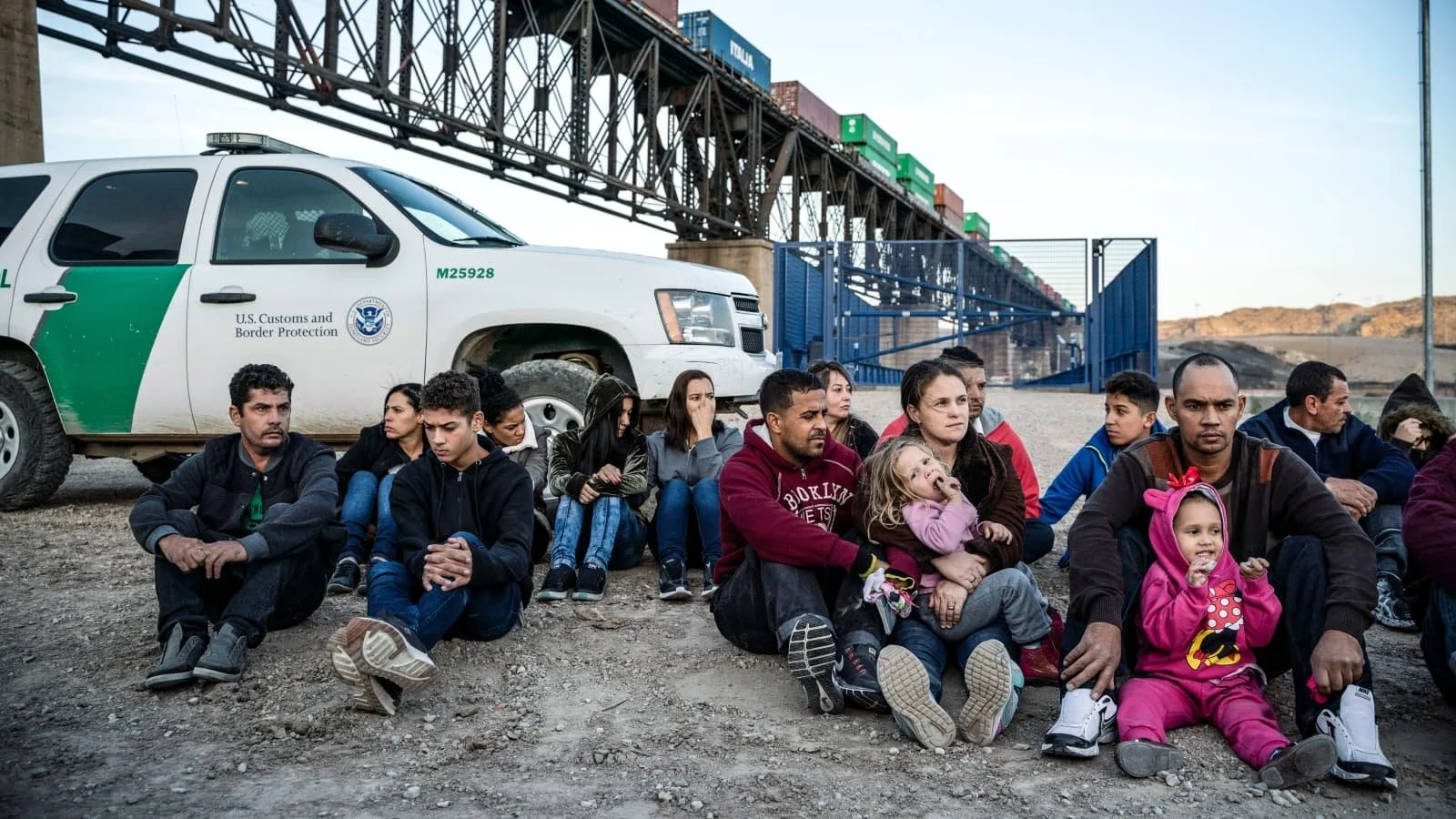
Human Trafficking
Illegal mining. In Michoacán, the Knights Templar cartel pushed this further than almost anyone. By 2014, Mexican officials were naming illegal iron ore mining, not methamphetamine, as the cartel's top source of income, with the group charging roughly $15 a ton across the whole chain from extraction to export. Mexico's iron ore exports to China through the Michoacán port of Lázaro Cárdenas went from 1.5 percent of the country's total in 2008 to nearly half by 2012, much of it moving through cartel-controlled infrastructure. The same group also controlled the region's lime and avocado production through extortion. Further north, the Zetas built a parallel coal business in Coahuila, reportedly moving 10,000 tons a week at marked-up prices.
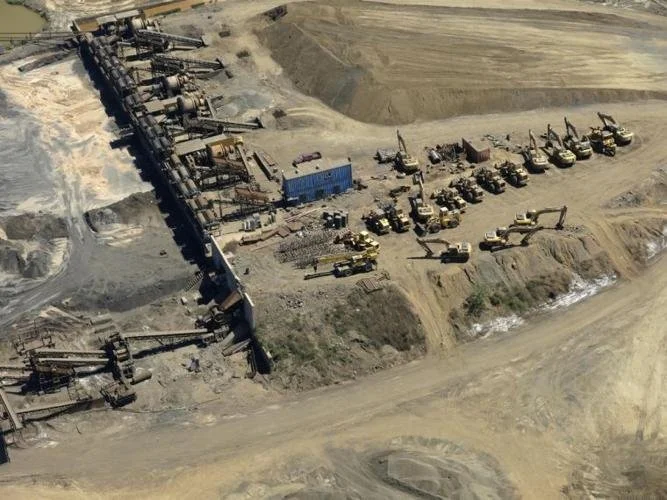
Illegal Mining Iron Ore
Extortion. This barely needs its own explanation, because it functions less like a business line and more like a tax base. Cartels that hold territory routinely charge protection fees to businesses ranging from small shops to large farms, and in some areas it's formalized enough to resemble an actual tax system, with rates, collection schedules, and consequences for nonpayment.
What the Diversification Tells Us
Cartel leadership didn't diversify because drug trafficking stopped being profitable. They diversified because a business built entirely on smuggling a product across a heavily policed border carries seizure risk at every stage. Fuel theft, illegal mining, and extortion don't have that exposure, since none of it needs to cross an international border to generate revenue. That makes it a resilient complement to a drug trade that will always face the threat of interdiction. A Treasury official said as much in 2025, announcing sanctions on a CJNG fuel-smuggling network: cartels are expanding well beyond traditional drug trafficking to generate revenue. Calling these groups "drug cartels" undersells what a lot of them have become. In places like Michoacán and along Mexico's pipeline network, they aren't just bigger criminal organizations. They're the dominant employer, tax authority, and infrastructure controller in territory the state has largely stopped contesting.
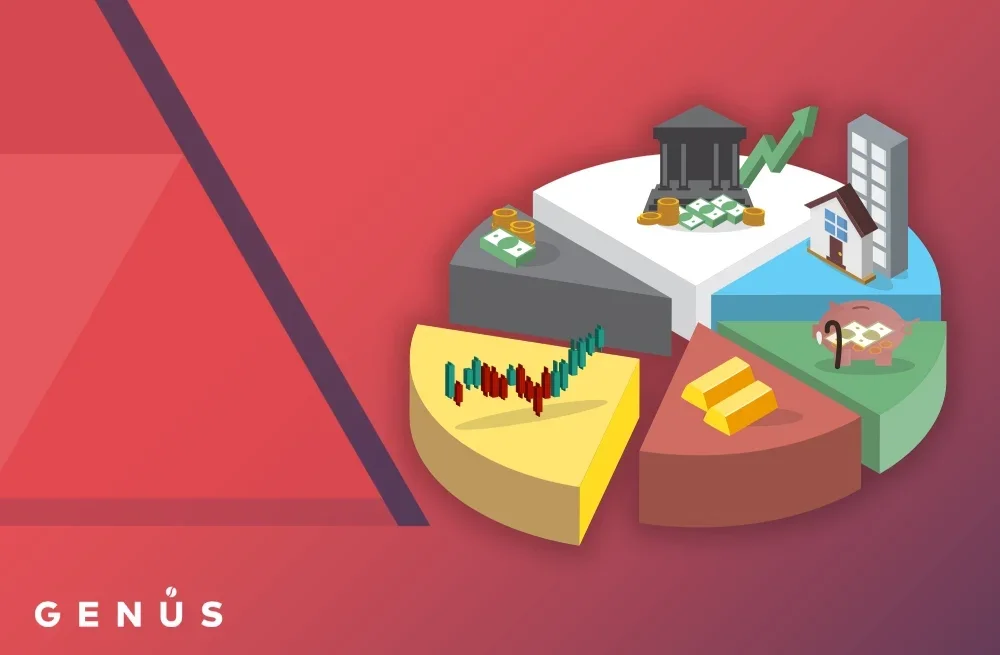
These organizations are diversified. They have multiple businesses they get revenue from. Their share of the pie is not just drugs, its much bigger than that today.
Part 3 picks up from there, on how these organizations are actually structured internally, how leadership succession works, and what happens to a territory when a cartel's chain of command comes apart.
Works Cited
"A Look at How the Cocaine Trade Works." NPR, 9 Jan. 2026, www.npr.org/2026/01/09/nx-s1-5616463/an-look-at-how-the-cocaine-trade-works.
"From Coca to Cocaine: The Colombian Drug Trade." CliffsNotes, www.cliffsnotes.com/study-notes/29408696. Accessed 16 Sept. 2026.
"Prime Numbers: Doped." Foreign Policy, 16 Oct. 2009, foreignpolicy.com/2009/10/16/prime-numbers-doped/.
"Fast Facts: How Cartels Are Diversifying in Mexico." Security Management, ASIS International, June 2023, www.asisonline.org/security-management-magazine/articles/2023/06/fuel-theft-and-cartels/fast-facts/.
"US Targets Mexican Cartel's Cross-Border Fuel Smuggling Operation." FreightWaves, www.freightwaves.com/news/us-targets-mexican-cartels-cross-border-fuel-smuggling-operation. Accessed 16 Sept. 2026.
Rosen, Jacky, and John Cornyn. "Rosen, Cornyn Introduce Bill to Combat Fuel Theft by Cartels." Office of Senator Jacky Rosen, U.S. Senate, www.rosen.senate.gov/blog/rosen-cornyn-introduce-bill-to-combat-fuel-theft-by-cartels/. Accessed 16 Sept. 2026.
Mindich, Talia. "Mexican Cartel Moves Beyond Drugs, Diversifies Its Illegal Revenue Streams." PBS NewsHour, 17 Mar. 2014, www.pbs.org/newshour/world/mexican-cartel-moves-beyond-drugs-diversifies-illegal-revenue-streams.
"Mexican Drug Lords Strike Gold in Dirty Old Coal." The Peninsula, 18 Nov. 2012, s.thepeninsula.qa/article/18/11/2012/mexican-druglords-strike-gold-in-dirty-old-coal.