Series: “The Business of Cartels” - Part 1: Origins - From Moonshine to Multinational
Why am I interested in narcos?
Let’s first examine the difference between a gang and a cartel.
A gang is usually smaller and more localized. They are more informal and often tend to focus on street-level crime. Think of groups like MS-13, the Bloods, and the Crips. Cartels, on the other hand, are much larger in scope and are often transnational organizations that can resemble Fortune 500 companies. They focus on controlling and perfecting their supply chains. They are involved in the production of drugs, transportation and logistics, and the distribution of illegal goods across countries and regions. Sometimes, they even infiltrate politics and have governors and other government officials in their back pockets. Think of companies like Merck & Co., Johnson & Johnson, or Pfizer—but as the illegal versions of those multibillion-dollar corporations. Examples of such organizations include the Sinaloa Cartel and the CJNG. I find it fascinating that the people who run these organizations often didn’t go to school or have any experience working for a large, legitimate business. Some are even illiterate. They started in the drug trade and simply never stopped. They control regions, countries, and have influence over politics around the world. I find that to be an interesting story.
The Business of Cartels
Part 1: Origins — From Moonshine to Multinational
Prohibition's Blueprint
When a government bans something people want to buy, it doesn't make the demand go away. It just decides that demand will be met by people willing to break the law, and it lets those people set the price. That's the basic economic fact behind every drug trafficking organization discussed in this series, and the clearest place to see it in American history is Prohibition. The 18th Amendment banned alcohol in 1920. People kept drinking. Criminal syndicates built the infrastructure to supply them: smuggling routes from Canada and the Caribbean, bribed police and judges, and enough organizational discipline to run something closer to a business than a street gang. Al Capone's Chicago operation is the famous example, but the model repeated in cities across the country. These weren't just loose bands of thugs; they had territory, supply chain logistics, and local officials who were paid to look away.
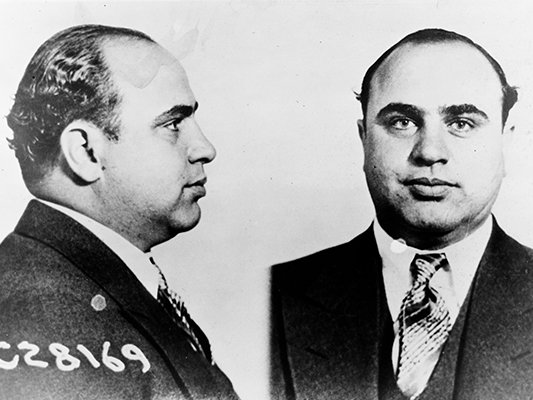
Al Capone
Prohibition ended in 1933, but the syndicates didn't dissolve along with it. The routes, the laundering techniques, the corrupted officials, all of it got repurposed for gambling and prostitution rackets, and later for narcotics as those markets grew through the mid-20th century. Organized crime in America didn't start with drugs. It found drugs later, because drugs turned out to be the most profitable illegal product prohibition had yet produced.
The Colombian Boom
Cocaine wasn't a significant product in the U.S. market until the 1970s. Colombian traffickers, many of them already moving marijuana, started smuggling small amounts of cocaine north in suitcases around the middle of the decade. At the time, a kilo could be processed in a jungle lab for around $1,500 and sold on American streets for up to $50,000 (33x markup). Pablo Escobar came up as a small-time thief in Medellín. The Ochoa brothers came from a respected ranching family. Gonzalo Rodríguez Gacha had made his early money in Colombia's emerald trade. Between them and a handful of others, they built the Medellín Cartel in the late 1970s, and what it became over the next decade looked less like a criminal gang than a logistics company with a private air force. The cartel bought planes, built more sophisticated processing labs, and at one point purchased a small Caribbean island just to refuel aircraft on the way north.
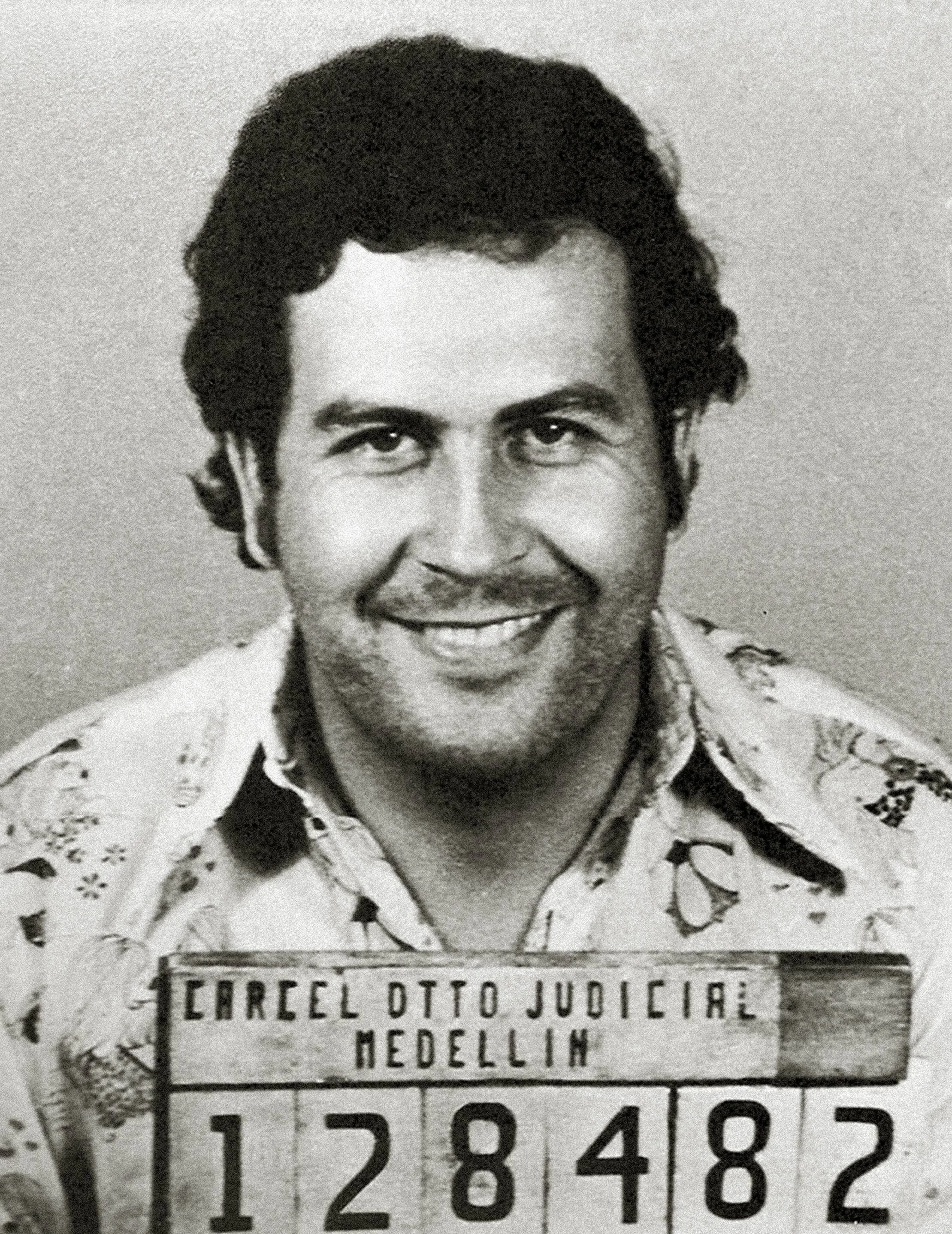
Pablo Escobar
By the early-to-mid 1980s, estimates put the organization's daily profits in the tens of millions of dollars. Escobar spent some of it on housing projects and soccer fields in Medellín's poorer neighborhoods, which bought him real loyalty in the communities that later sheltered him from the police. In 1982 he was even elected as an alternate member of the Colombian Congress. It's worth sitting with that for a second: a cocaine trafficker running for and winning a seat in the national legislature. The line between criminal enterprise and local political power wasn't blurry in Medellín during this period. It barely existed. The money they made bought protection, but it also bought a war. Escobar's organization is linked to thousands of killings over the years, including judges, police officers, a presidential candidate, and journalists, along with a bombing campaign aimed at stopping Colombia from extraditing traffickers to face trial in the United States. For a stretch in the late 1980s, Medellín wasn't just corrupting the Colombian state. It was fighting it, with car bombs and assassinations, more like an insurgency than an ordinary criminal enterprise.
The Cali Cartel took a different approach. The Rodríguez Orejuela brothers built an organization that, at its peak, controlled a comparable share of the global cocaine market, but they ran it quietly. Profits went into legitimate businesses. Relationships were built with lawyers and bankers rather than hitmen. Cali avoided the public warfare that made Escobar the most hunted man on the planet, and at various points its leadership reportedly helped Colombian police and the DEA close in on him. Whether that was principle or just business is a matter of interpretation, but it's a useful reminder that cartels fight each other as hard as they fight the state, and "cooperating with the authorities" can simply be a competitive move against a rival.
Colombian police killed Escobar in December 1993. Medellín came apart without him. Cali picked up a lot of what was left, at least for a few years, until its own leadership was arrested and prosecuted through the mid-1990s. None of this slowed Colombian cocaine production much. What it changed was who controlled the route the product took to reach American buyers.
The Shift North
That question of who controls the route is what eventually moved the center of the trade from Colombia to Mexico. Mexican traffickers had been in the smuggling business for decades before cocaine entered the picture, mostly running marijuana and heroin across a border they knew better than anyone. What changed things in the 1980s was, in part, the U.S. government's own success in a different fight. As interdiction efforts tightened around Florida and the Caribbean, the traditional entry point for Colombian cocaine, traffickers needed another way in. Mexico became the obvious alternative, and a trafficker from Sinaloa named Miguel Ángel Félix Gallardo was in position to take advantage of it.
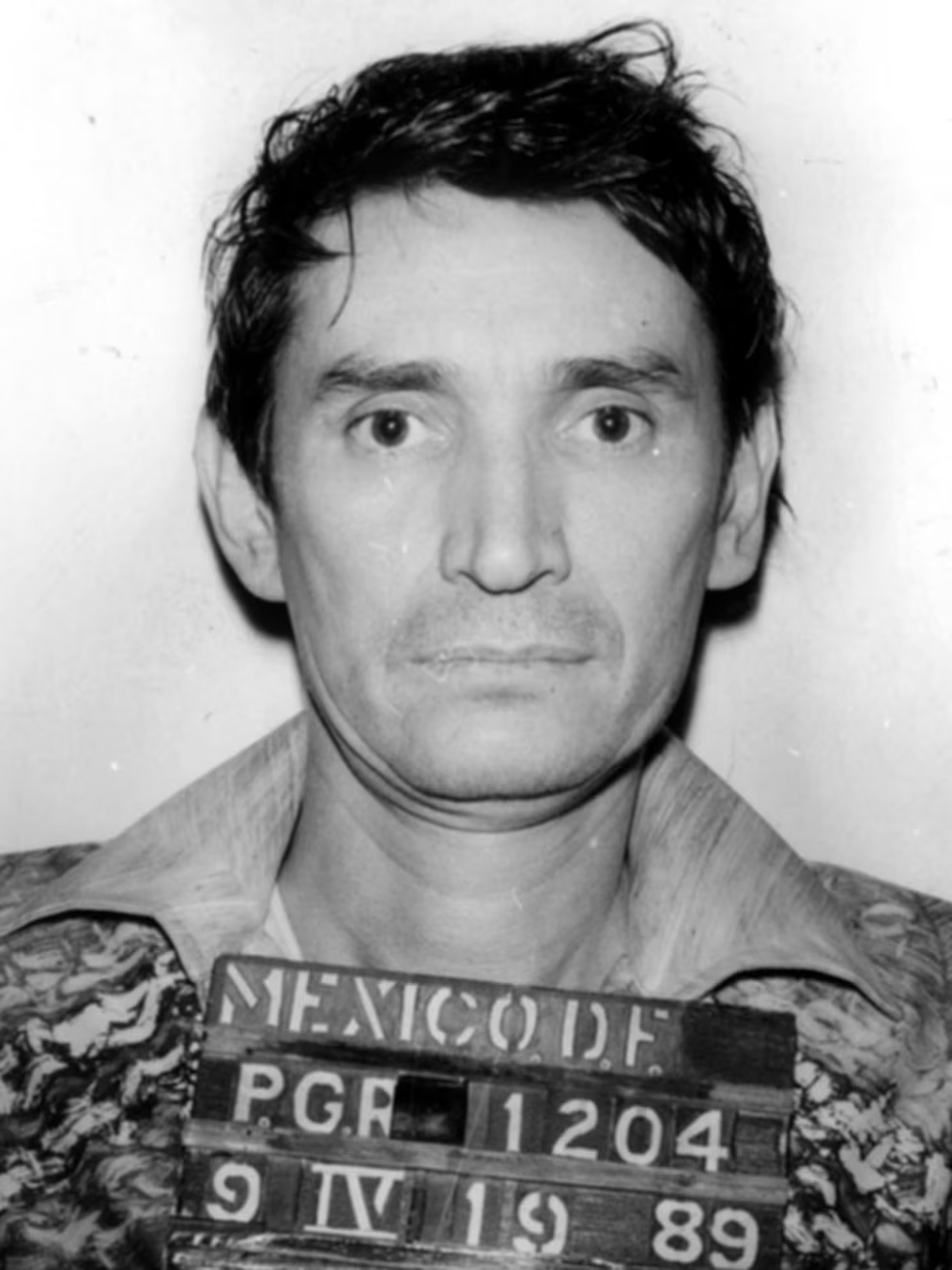
Felix Angel Gallardo
Félix Gallardo looked at Mexico's smuggling operations and saw a mess: dozens of small, local groups working independently, each one an easy target for law enforcement. Working with Rafael Caro Quintero and Ernesto Fonseca Carrillo, he started pulling the country's trafficking corridors, known as plazas, under a single structure. The result became known as the Guadalajara Cartel. It marked a real shift in how the business worked. Instead of taking a flat fee to move Colombian product across the border, Félix Gallardo's organization began taking a cut of the cocaine itself, roughly half of every shipment. Mexican traffickers stopped being hired help. They became partners, and eventually owners. Félix Gallardo's personal run ended in 1989, when he was arrested following the 1985 torture and murder of DEA agent Enrique "Kiki" Camarena. But the structure survived him. He had divided Mexico's trafficking territory among a set of lieutenants rather than running everything through himself, and those lieutenants went on to found the organizations that would dominate Mexican trafficking for the next thirty years: the Sinaloa, Tijuana, and Juárez cartels, each claiming a piece of what used to be one network. Colombia had already proven a drug trafficking operation could generate the kind of wealth normally associated with a small country's GDP. Mexico now controlled the last leg of the route into the world's largest drug market, the part closest to the border and hardest for American agencies to reach. As Colombian organizations broke apart through the 1990s under the pressure of Escobar's death and the prosecutions in Cali, Mexican groups were the ones left holding the most valuable piece of the supply chain.
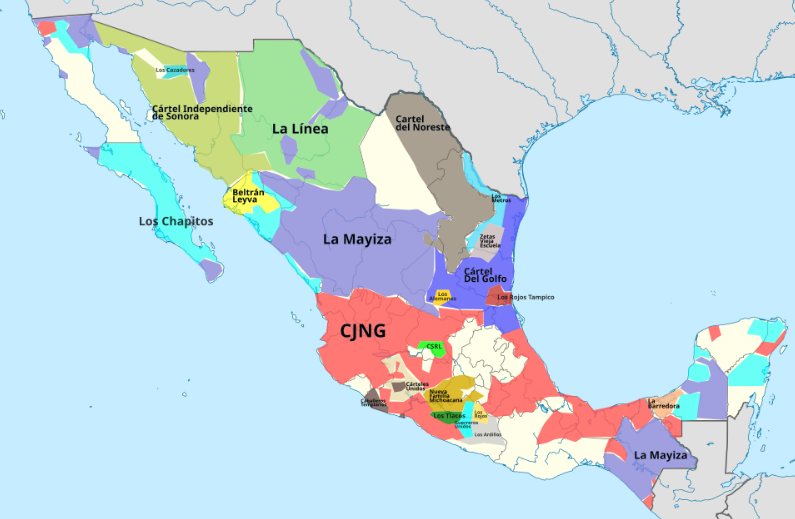
Current Map of Mexican Cartels
Setting the Stage
Each stage of this story, Prohibition-era bootlegging, the Colombian cocaine boom, and the Mexican takeover of trafficking routes, followed the same basic incentive. Prohibition creates scarcity. Scarcity creates margin. And enough margin will always attract organization, whether that means Capone's Chicago outfit or Félix Gallardo's plaza system. The more effective law enforcement got at shutting down one route, the more consolidated and sophisticated the next generation of traffickers became at finding another one.
Part 2 looks at what these organizations actually turned into once they moved past simple smuggling: supply chains, logistics networks, and diversified revenue streams that function less like a crime family and more like a multinational company with an armed wing.
Works Cited MLA Format
InsightCrime. "Medellín Cartel." InsightCrime, insightcrime.org/colombia-organized-crime-news/medellin-cartel/. Accessed 16 Sept. 2026.
"Drug Cartel." Encyclopedia Britannica, www.britannica.com/topic/drug-cartel. Accessed 16 Sept. 2026.
Frontline: Drug Wars. "The Colombian Cartels." PBS, Public Broadcasting Service, www.pbs.org/wgbh/pages/frontline/shows/drugs/business/inside/colombian.html. Accessed 16 Sept. 2026.
"Cali Cartel." Wikipedia, Wikimedia Foundation, en.wikipedia.org/wiki/Cali_Cartel. Accessed 16 Sept. 2026.
"Miguel Ángel Félix Gallardo." Wikipedia, Wikimedia Foundation, en.wikipedia.org/wiki/Miguel_Ángel_Félix_Gallardo. Accessed 16 Sept. 2026.