Series: “The Business of Cartels” - Part 3: Structure & Power
The Business of Cartels
Part 3: Structure & Power
A cartel isn't run by one guy giving orders down a chain, the way a mob boss gets portrayed in film. It's closer to a loose corporate structure sitting on top of a much larger, disposable labor pool, held together as much by fear and money as by any formal org chart. Knowing how that structure works, and what happens when a piece of it gets removed, explains a lot about why the drug war has dragged on for twenty years without a clear winner.
The Top: Capos and Plaza Bosses
At the top sits the capo, sometimes one person, sometimes a small leadership council. Below that are plaza bosses, the people who control a specific territory or trafficking corridor, a plaza. A plaza boss runs their region almost like a regional VP: they answer to leadership above them, but day to day they're making their own calls on logistics, local alliances, and who gets to move product through their patch of ground.
This is the level where the actual command structure tends to be looser than outsiders assume. Mexico's cartels have historically functioned less like single unified companies and more like federations, alliances of semi-independent cells that cooperate when it's profitable and turn on each other when it isn't. The Sinaloa Cartel for years operated this way, with different factions, sometimes literally different sons of "El Chapo" Guzmán, running semi-autonomous operations under one umbrella brand.
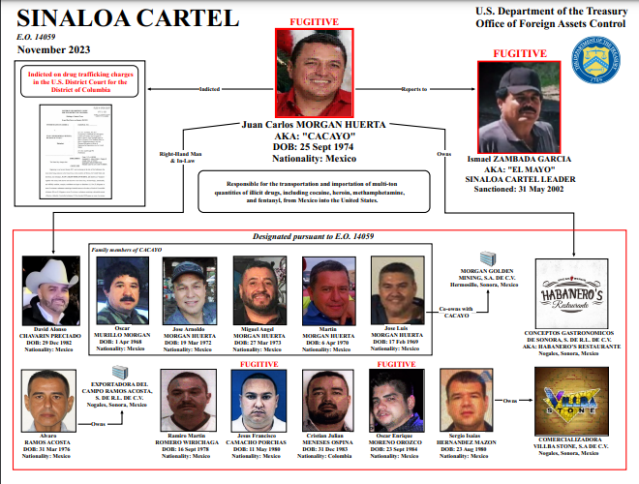
Sinaloa Cartel Org Chart 11/2023
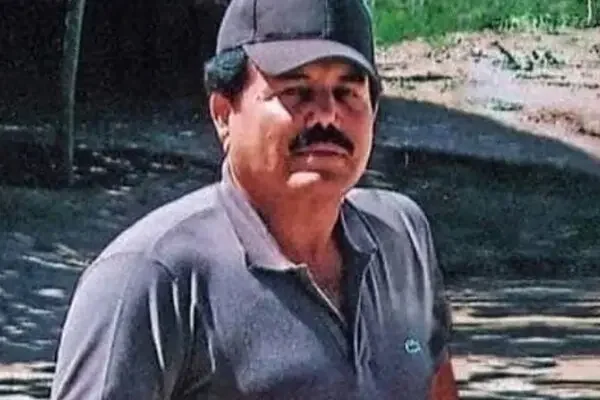
El Mayo
The Middle and the Bottom: Sicarios, Halcones, and Everyone in Between
Below the plaza bosses is where the organization gets much larger and much more expendable. Sicarios are the hitmen and enforcers, the ones who carry out kidnappings, assassinations, and the violence that keeps rivals and local populations in line. Halcones, literally "hawks," work as lookouts, tracking police and military movement and rival cartel activity, often kids on bicycles or motorbikes with a phone, paid a small weekly amount to watch a street corner.
Recruitment at this level draws heavily on economic desperation rather than ideology. In regions with few legal job opportunities, a cartel can offer better pay than almost any legitimate work available, especially to teenagers and young men with no other prospects. Some recruitment is straightforwardly economic. Some of it isn't voluntary at all: forced recruitment of minors has become a well-documented problem in cartel-controlled parts of Mexico, with groups pressuring or coercing young people into halcón or sicario roles under threat to themselves or their families. This bottom tier is treated as replaceable. A halcón or a low-level enforcer who gets arrested or killed is easy to replace, because the pool of people with few other options is large and constantly renewing itself.
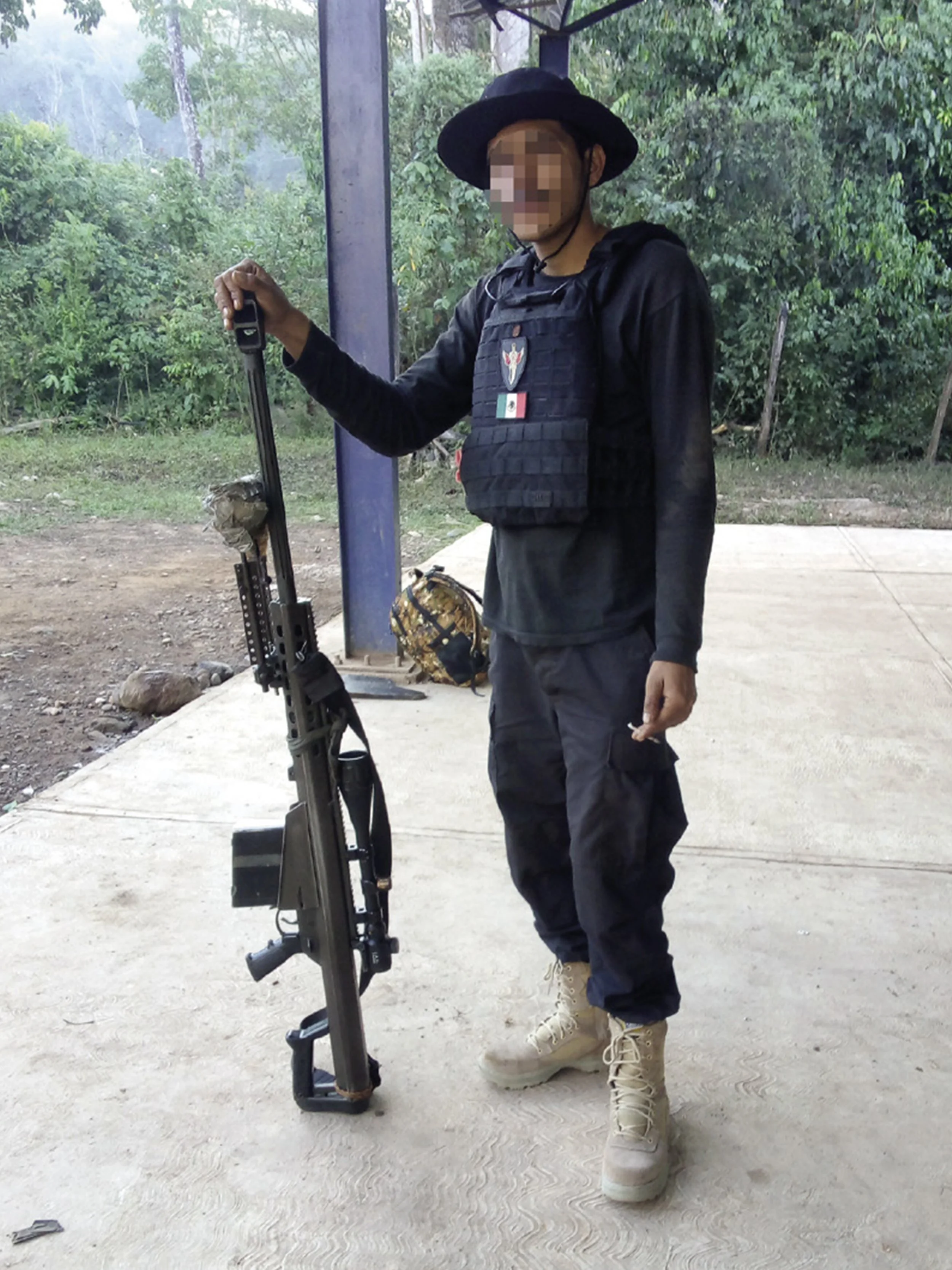
A sicario or cartel soldier
The Paramilitary Wing: How Los Zetas Rewrote the Playbook
For most of the 20th century, cartel violence was carried out by people who came up through the criminal world itself, smugglers and street enforcers with no formal military training. That changed in the late 1990s, and the group responsible for the change was Los Zetas. In 1997, roughly 30 soldiers from an elite Mexican Army unit called the Grupo Aeromóvil de Fuerzas Especiales, GAFE, deserted and went to work for Osiel Cárdenas Guillén, who was fighting to hold on to control of the Gulf Cartel. GAFE was a serious unit. Some of its members had trained at U.S. Army facilities like Fort Bragg, learning tactics meant to be used against drug traffickers, not for them. Once they switched sides, that training became the Gulf Cartel's enforcement wing, and it turned out to be devastatingly effective. Named after the radio call sign of their first commander, Arturo Guzmán Decena, "Zeta 1," the group functioned less like hired muscle and more like an actual military unit operating outside the law.
By the mid-2000s, Los Zetas had grown ambitious enough to break away from the Gulf Cartel entirely and become an independent organization, at one point even recruiting Kaibiles, former Guatemalan special forces, to help train new members. They pioneered a style of extreme public violence, beheadings, mass killings, bodies left on display, meant less as retaliation and more as advertising. The message was that resistance, whether from a rival cartel or from the state, would be met with force disproportionate to anything seen before. Other cartels, watching Los Zetas take territory through sheer brutality, responded by building their own paramilitary wings, and an arms race that had never existed before in Mexico's underworld took hold. The lesson other organizations took from the Zetas wasn't really about tactics. It was about capability. A criminal group with actual military training and discipline could out-fight a criminal group without it, and once that became clear, every serious cartel needed one.
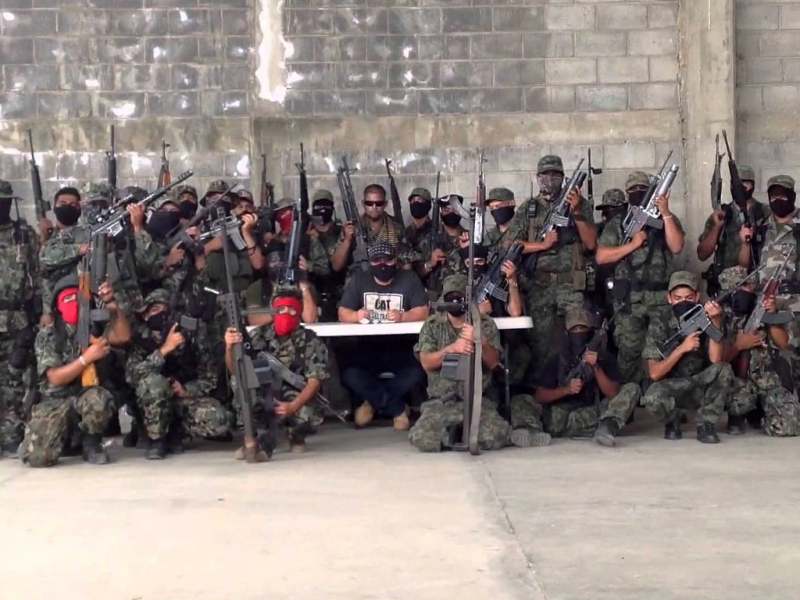
Zetas
What Happens When You Cut the Head Off
For twenty years, the primary U.S. and Mexican strategy for fighting cartels has been what's known as the kingpin strategy: identify the top leader of an organization, and kill or capture him. The logic is straightforward. Remove the person at the top, and the organization should collapse or at least weaken significantly. In practice, it rarely works that way, and there's now two decades of evidence showing why. Los Zetas is itself the clearest example. After Cárdenas Guillén was arrested in 2003 and later extradited, and after a string of subsequent leaders were killed or captured through the 2000s and 2010s, the group didn't fold. It splintered into competing factions, each one fighting the others for control of what remained, and lost most of the unified strength that had made it so feared in the first place. The same pattern played out with the Guadalajara Cartel after Félix Gallardo's 1989 arrest, which produced the Sinaloa, Tijuana, and Juárez organizations described in Part 1, and with countless smaller groups since.
The pattern has repeated recently enough that it's still generating fresh data. When the Mexican military killed Jalisco New Generation Cartel leader Nemesio "El Mencho" Oseguera Cervantes in February 2026, U.S. officials celebrated it as a major win. Security analysts were less optimistic, pointing to what researchers call "pax mafiosa," the relative stability that can hold under a single, entrenched leader who has already fought and won the battles for territory. Remove that leader without a clean succession in place, and the stability goes with him. A similar dynamic followed the July 2024 arrest of Sinaloa Cartel cofounder Ismael "El Mayo" Zambada in Texas. A power struggle broke out inside the organization within weeks. Homicides in Sinaloa state jumped from 44 in August of that year to 142 the following month, and femicides in the state more than doubled between 2024 and 2025 as rival factions fought to establish control.
Researchers studying the strategy have found a consistent pattern behind these episodes: killing a leader tends to produce more violence than arresting one, because a violent death removes any possibility of an orderly handover, while an arrest at least sometimes allows a designated successor to step in without a fight. Either way, the underlying business, the routes, the corrupted local officials, the demand on the other side of the border, stays completely intact. Only the org chart changes, and usually for the worse. As one Mexican security official put it, cutting off the head doesn't matter much if the roots are still in the ground. You haven't dismantled anything. You've just made the next fight for control more violent than the last one. That churn, leaders removed, organizations splintering, smaller and more violent groups taking their place, is a big part of why Mexico's homicide numbers kept climbing for years even as arrest and extradition numbers climbed with them. It also sets up the next question this series needs to answer: how do these organizations survive at all, let alone thrive, in the face of that kind of pressure? Part 4 looks at the answer, which has less to do with firepower than with the state officials, at every level, who get paid to look the other way.
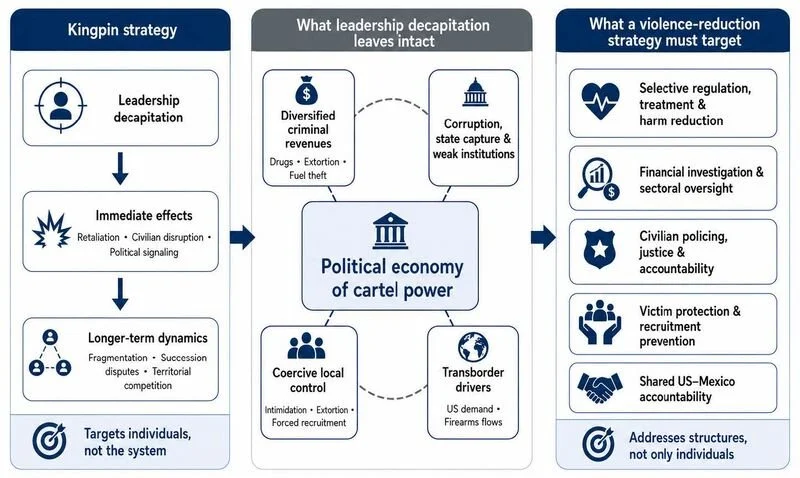
Kingpin Strategy Chart
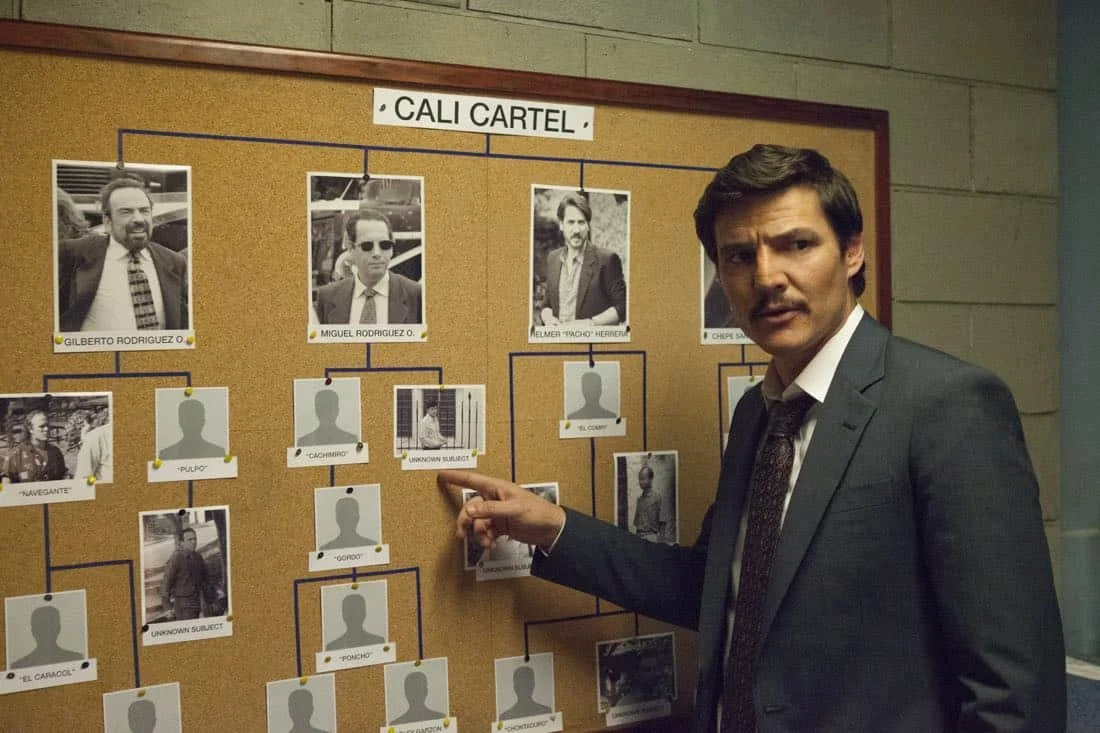
Scene from Narcos on Netflix examining the Cali Cartel structure.
Works Cited
"Zetas, Los." InSight Crime, insightcrime.org/groups-mexico/mexico-zetas. Accessed 18 Sept. 2026.
"Los Zetas: A Look at Mexico's Most Violent Cartel." Grey Dynamics, greydynamics.com/los-zetas-a-look-at-mexicos-most-violent-cartel/. Accessed 18 Sept. 2026.
Astorga, Luis, and David A. Shirk. "Drug Trafficking Organizations and Counter-Drug Strategies in the U.S.-Mexican Context." Mexico and the United States: The Politics of Partnership, University of San Diego, Trans-Border Institute, p. 39.
Wrate, Jonny, and Lilia Saul. "The Kingpin Fallacy: What Happens When You Take Out the Leader of a Mexican Cartel?" OCCRP, 1 Apr. 2026, www.occrp.org/en/feature/the-kingpin-fallacy-what-happens-when-you-take-out-the-leader-of-a-mexican-cartel.
Giralt, Eduardo, and Genevieve Kotarska. "The Kingpin Strategy: More Violence, No Peace." RUSI, Royal United Services Institute, 17 Nov. 2022, shoc.rusi.org/blog/the-kingpin-strategy-more-violence-no-peace.
"Decapitating Cartels? Mexico Leans into the 'Kingpin Strategy.'" Al Jazeera, 23 Apr. 2026, www.aljazeera.com/features/longform/2026/4/23/decapitating-cartels-mexico-leans-into-kingpin-strategy-but-at-a-cost.
"Kingpin Strategy." Mexico Violence Resource Project, www.mexicoviolence.org/resource/Kingpin-Strategy. Accessed 18 Sept. 2026.