Philanthropy And Giving
Philanthropy has been something I have always been interested in. I hope I am successful enough one day to be able to donate millions of dollars to those in need. Philanthropy carries particular weight in rural Appalachia and inner-city communities because both face deep, structural challenges that public funding and market forces have historically failed to fully address.
In Rural Appalachia:
Economic transition — Decades of coal industry decline have left many communities without a replacement economic base; philanthropy helps fund workforce retraining, small business development, and diversification into tourism, agriculture, or tech.
Healthcare access — Vast distances, hospital closures, and provider shortages make healthcare philanthropy (mobile clinics, telehealth infrastructure, addiction treatment) essential, especially given the region's opioid crisis.
Infrastructure gaps — Broadband, roads, and water systems often lag far behind urban standards; private and foundation dollars frequently fill funding gaps that federal infrastructure programs move too slowly to close.
Preserving identity and dignity — Effective philanthropy here respects Appalachian culture and self-reliance rather than imposing outside solutions. Funding locally-led initiatives tends to work better than top-down intervention.
The Inner City:
Concentrated poverty and disinvestment — Decades of redlining, disinvestment, and deindustrialization left concentrated pockets of poverty; philanthropy can direct capital back into neighborhoods that conventional lending and investment still often bypass.
Education equity — Underfunded schools benefit from philanthropic support for tutoring, mentorship, scholarships, and after-school programming that public budgets can't stretch to cover.
Housing stability — Affordable housing initiatives, eviction prevention, and community land trusts funded by philanthropy help stabilize families and neighborhoods amid gentrification pressures.
Violence prevention and youth services — Community-based violence interruption programs and youth development initiatives are frequently philanthropy-dependent, filling roles that strained city budgets can't fully staff.
Commonality
Both regions suffer from what's sometimes called "opportunity deserts" or geographic areas cut off from the resources needed to build wealth and stability, whether that's healthcare, capital, education, or infrastructure. I would love to step in one day and make a large impact in the areas that need it. These are our fellow Americans and they deserve to be taken care like any other person who’s life is going well.
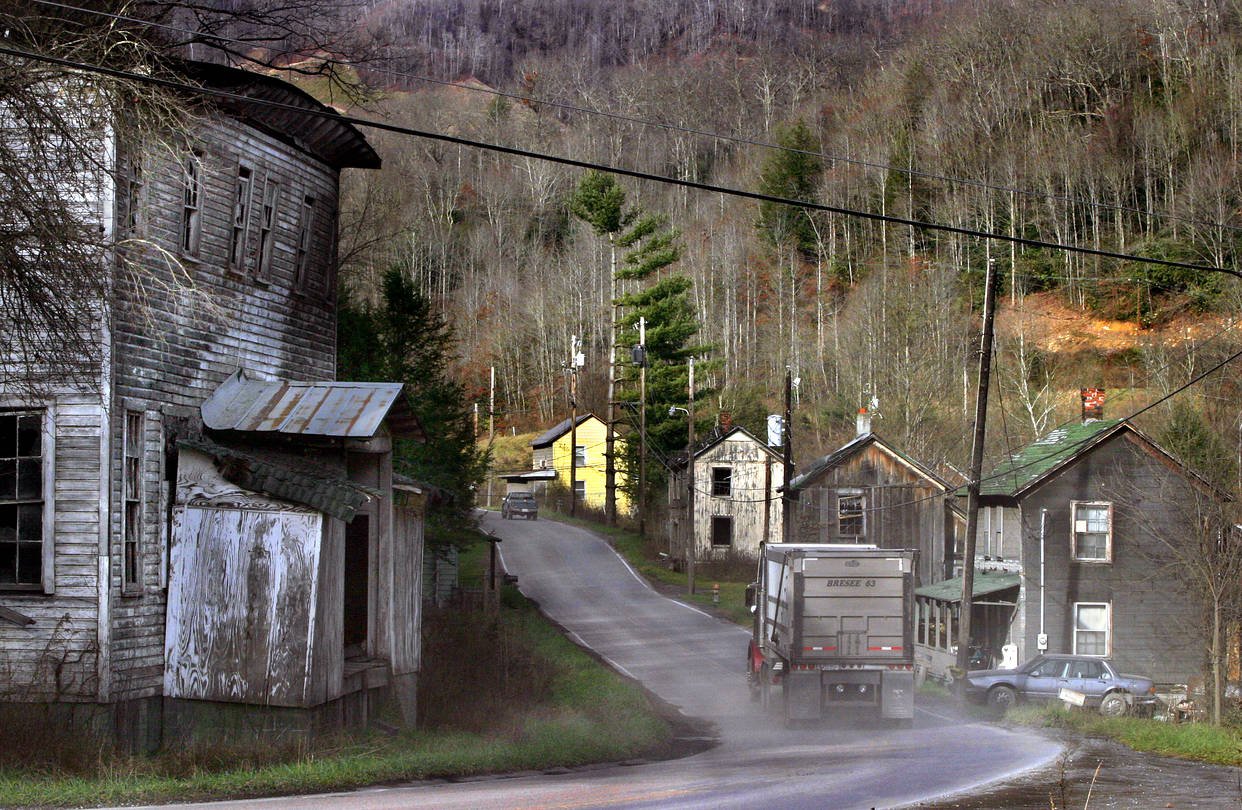
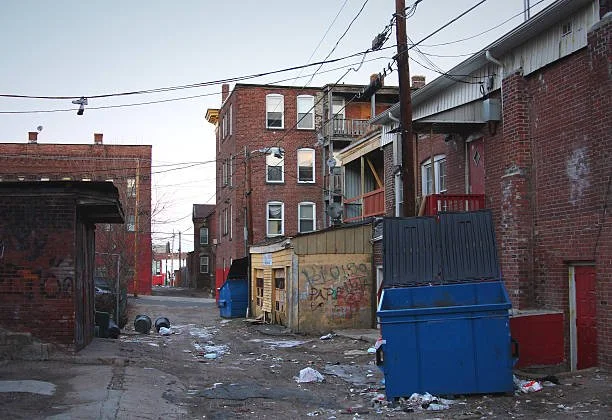
Rural Appalachia Stats (from Claude)
More than 14% of Appalachians live in poverty or "deep" poverty, based on the Appalachian Regional Commission's most recent regional data. Appalachian Regional Commission
The overall poverty rate declined 1.5 percentage points between 2014-2018 and 2019-2023, though rates stayed the same or increased in 98 counties — meaning progress has been uneven across the region.
Median household income in Appalachia sits at 82% of the national median, even after a period of improvement.
During 2019-2023, median family income in Appalachia was 85% of the U.S. median, though 17 counties in metro areas matched or exceeded the national figure.
Child poverty dropped three percentage points to 19%, and poverty among young adults (18-24) fell to 21.8% — but poverty rose 1.3 points for residents 65 and older, showing the burden is shifting toward the elderly.
Appalachia has 119 "high-poverty" counties today (defined as 1.5x the national poverty rate or higher) — down from 297 in 1960, real long-term progress, but still concentrated hardship. Appalachian Regional Commission
For fiscal year 2026, 75 Appalachian counties are classified as economically "distressed" and 90 as "at-risk," out of 423 total counties. Appalachian Regional Commission
Inner-City / Urban Poverty Stats (from Claude)
Houston now has the highest poverty rate among the largest U.S. cities at roughly 21.2%, surpassing Philadelphia's 19.7% — both are dramatically above the national average. Houston Public Media
New York City has the largest number of people in poverty of any U.S. city — nearly 2.5 million, or about one in eight residents. NCHStats
Poverty in major U.S. cities reached its highest level in over a decade in 2025, driven by rising rents, stagnant wages, and the end of pandemic-era relief — with homelessness climbing to over 771,000 people nationally on a given night in 2024.
Roughly 12.8 million people — about 4% of the U.S. population — live in areas of concentrated poverty (where at least 30–40% of residents are poor), and these areas are overwhelmingly located in inner-city urban neighborhoods rather than rural or suburban areas.
Historically, poverty rates for Black and Hispanic populations in inner cities have exceeded 25% — often four to five times higher than surrounding suburban rates, illustrating how concentrated urban poverty disproportionately affects communities of color. HUD User
ICIC defines an "inner city" as an area with a poverty rate of 20%+ (or 1.5x the metro area's rate), paired with elevated unemployment and median income at half or less of the surrounding metro — a useful working definition for grant writing or program design. ICIC
List of Charitable Organization
Contact them if you would like to donate your time or money. There are many more charities than just the ones listed here. Feel free to do a more in depth dive to find one you feel comfortable donating to. I would love to have my own charitable organization one day that I control. I would love to see first hand how the operation directly effects people on the ground that are receiving the aid.
Rural Appalachia
Christian Appalachian Project (CAP)
Faith-based nonprofit providing food, housing repair, education, and elder services across Appalachia. 89% of donations go directly to programs.
Phone: 1-866-270-4CAP (4227)
Email: capinfo@chrisapp.org
Mail: Christian Appalachian Project, PO Box 55911, Lexington, KY 40555-5911
Web: christianapp.org
Appalachia Service Project (ASP)
Focuses on home repair and rebuilding for low-income families in Central Appalachia.
Reception: (423) 854-8800
To donate: (866) 607-4433
To volunteer: (800) 289-4254
Mail: 4523 Bristol Highway, Johnson City, TN 37601
Web: asphome.org
Americans Helping Americans (AHA)
Serves impoverished families, veterans, elderly, and disabled individuals, primarily in West Virginia; delivered 15,000+ food boxes in 2024.
Email: info@helpingamericans.org
CFC #11962 (federal employee giving)
Web: helpingamericans.org
Inner-City / Urban Communities
National Urban League
Nation's oldest and largest civil-rights-based organization addressing economic empowerment in Black urban communities; operates through 90+ local affiliates nationwide.
Phone: (212) 558-5300
Address: 80 Pine Street, 9th Floor, New York, NY 10005
Web: nul.org (many cities also have a local Urban League affiliate — worth searching "[your city] Urban League")
Boys & Girls Clubs of America
Nationwide network of 5,500+ local Clubs serving 4 million kids annually with safe spaces, mentoring, and academic support — many located in inner-city neighborhoods.
Headquarters: Atlanta, GA
Web: bgca.org (site has a club locator to find and give directly to a specific inner-city chapter)
Local Initiatives Support Corporation (LISC)
Invests directly in under-resourced urban neighborhoods — affordable housing, small business lending, and economic development.