Intro
Rare earths have a branding problem. The name makes them sound like buried treasure that only a few lucky countries sit on. In reality, these 17 elements, which end up in EV motors, wind turbines, fighter jets, and the phone in your pocket, are scattered across most of the planet.
So why does everyone treat them like they’re scarce? Because digging them up was never the hard part.
The mine is just step one
China produced about 270,000 of the roughly 390,000 tonnes of rare earth oxide mined worldwide in 2025, which works out to about 69 percent (U.S. Geological Survey, “Rare Earths”). That’s a big share, but it isn’t the whole story. What happens after the mine matters more, and China handles about 90 percent of the world’s processing (Press Trust of India).
Why separation is such a headache
Here’s the trouble. The 17 elements are chemical lookalikes. Their atoms are nearly the same size and carry the same charge, so they show up tangled together in ore and refuse to come apart. Neodymium and praseodymium, two of the most valuable, sit right next to each other on the periodic table and are famously hard to split. The usual fix is solvent extraction. You run the mixture through a long series of tanks, and each pass nudges one element a little purer. Imagine sorting a giant bag of marbles that are all the same size and color, and you start to see why this takes so long. Then there’s the mess. Ore often contains radioactive thorium and uranium, and the process leaves behind acidic, toxic waste. China has long carried those costs with fewer regulatory hurdles than Western producers face. Western plants run into permit fights, lawsuits, and angry neighbors, which is why even Lynas’s plant in Malaysia turned into a political fight.
Decades of know-how
China has been running these plants for decades, and that kind of experience is hard to copy. Beijing seems well aware of it. Its October 2025 rules extended export controls to the technology used to produce and recycle rare earths and magnets, though those measures are among the ones now paused (Sheng et al.). You can buy the equipment, but you can’t buy the experience. Money is a problem too. China’s size lets it influence prices, so a new Western refinery can get undercut right when it’s trying to survive. That’s why many of these projects lean on government loans, like the $150 million the U.S. Department of War gave a Mountain Pass producer to build a heavy rare earth separation plant (U.S. Geological Survey, “Rare Earths (Heavy)”).
The heavy elements are the real squeeze
Dysprosium and terbium matter most because they keep magnets working at high temperatures, which is essential for defense systems and EV motors. They’re also geologically scarce, and nearly all commercial deposits sit in southern China and Myanmar (Bedford). Outside China, almost nobody has heavy rare earth separation running at scale. In the U.S., no company produced heavy rare earths in sustained commercial quantities in 2025 (U.S. Geological Survey, “Rare Earths (Heavy)”).
Leverage with a deadline
Beijing has already shown it’s willing to use this position. In April 2025, it started requiring export licenses for seven medium and heavy rare earths. That October, it went further, requiring authorization for certain foreign-made products containing at least 0.1 percent Chinese-origin rare earth material by value (Sheng et al.). Then came the Trump–Xi truce, and China suspended the October measures. But only until November 10, which is less than two weeks away. A pause isn’t a withdrawal, and the April licensing requirements were never suspended (Sheng et al.). If the pause lapses, companies would face broader licensing rather than a blanket ban. Still, the uncertainty alone is enough to make automakers and defense contractors nervous, since many of them remember last year’s shortages (Iyer).
Can the West catch up?
It’s trying. MP Materials in California and Australia’s Lynas are expanding, with government money behind them. But refineries take years to build, the heavy elements are the hardest to replicate, and a cheaper Chinese competitor can always drop prices. That’s the real story underneath the headlines. The contest isn’t about who has the most ore. It’s about who can refine it, and at what cost. Until that changes, every deadline out of Beijing is going to matter.
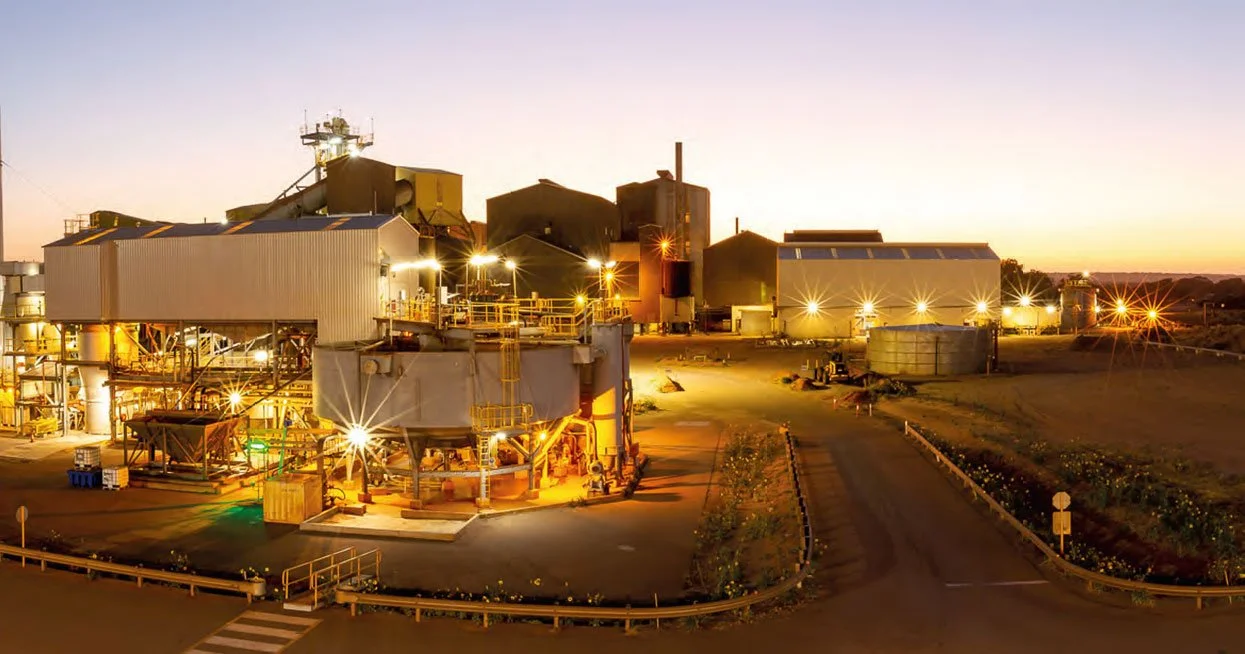
Iluka’s Australian Rare Earths Refinery
Works Cited
Bedford, Jason. “Rare Earths and Industry: Why Dependence on China Endures.” EAI Background Brief No. 1843, East Asian Institute, National University of Singapore, Nov. 2025, research.nus.edu.sg/eai/wp-content/uploads/2025/11/EAIBB-No.-1843-Rare-earths_China-2.pdf.
Iyer, Ram. “China Tightens Export Controls on Rare Earth Minerals Once Again.” TechCrunch, 9 Oct. 2025, techcrunch.com/2025/10/09/china-tightens-export-controls-on-rare-earth-minerals-once-again/.
Press Trust of India. “China Clamps Down More Curbs on Export of Rare-Earth Technologies.” ETV Bharat, 9 Oct. 2025, www.etvbharat.com/en/!international/china-clamps-down-more-curbs-on-export-of-rare-earth-technologies-enn25100906273.
Sheng, Jenny (Jia), et al. “China Suspends Export Controls on Certain Critical Minerals-Related Items.” Pillsbury Winthrop Shaw Pittman LLP, 13 Nov. 2025, pillsburylaw.com/en/news-and-insights/china-suspends-export-controls-certain-critical-minerals-related-items.html.
U.S. Geological Survey. “Rare Earths.” Mineral Commodity Summaries 2026, Mar. 2026, pubs.usgs.gov/periodicals/mcs2026/mcs2026-rare-earths.pdf.
---. “Rare Earths (Heavy).” Mineral Commodity Summaries 2026, Mar. 2026, pubs.usgs.gov/periodicals/mcs2026/mcs2026-rare-earths-heavy.pdf.
Extra: What are some things that rare earths are used in?
Magnets
Electronics and displays
Catalysts and emissions controls
Batteries and energy
Glass and ceramics
Lasers and medical
Aerospace