My Study Of How Criminal Organizations Move Cash And Launder It
In America, cash is not as big a part of daily life as it used to be. In many other countries, that is not the case. People there routinely trade and transact in physical cash, and many want U.S. dollars because their local currencies are less stable. If you are sitting on $10,000,000 in illicit cash, what do you do with it? You can’t just take it to a bank, although there are dirty bankers—you have to clean it. How do you clean it? In this post, I will outline some of the techniques these criminal organizations might use.
Stage 1: Placement
1) Trade-based money laundering: Criminals disguise illicit funds by moving value through trade. For example, someone might use dirty money to buy a commodity like avocados, then sell it domestically or abroad. The buyer simply pays for the goods and has no reason to question where the seller’s money originally came from. The seller ends up with proceeds that look like ordinary business revenue. In practice, launderers often manipulate invoices, such as overstating or understating prices or quantities, to move value across borders.

2) Complicit bankers: This relies on having the right contacts and relationships. A corrupt banker, or a bank that willfully ignores red flags, can help criminals deposit large amounts of cash without triggering the usual reporting and scrutiny. Once the money is in the banking system, it can be moved and spent as though it came from legitimate sources.

3) Cash-Intensive Front Business: How does a criminal launder funds through a front business? First, they acquire or partner with a legitimate business that naturally handles high volumes of cash—such as convenience stores, car washes, laundromats, bars, supermarkets, pawn shops, or casinos. Next, they mix the "dirty" cash directly with the clean daily earnings. By inflating sales receipts or reporting fake transactions, the illicit funds blend right in with legitimate customer revenue. When this process is spread across multiple locations and businesses, criminals can effectively wash massive amounts of cash over time. However, tax authorities like the IRS use industry benchmarks and automated audits to flag businesses whose revenue metrics look unusually high or out of line.

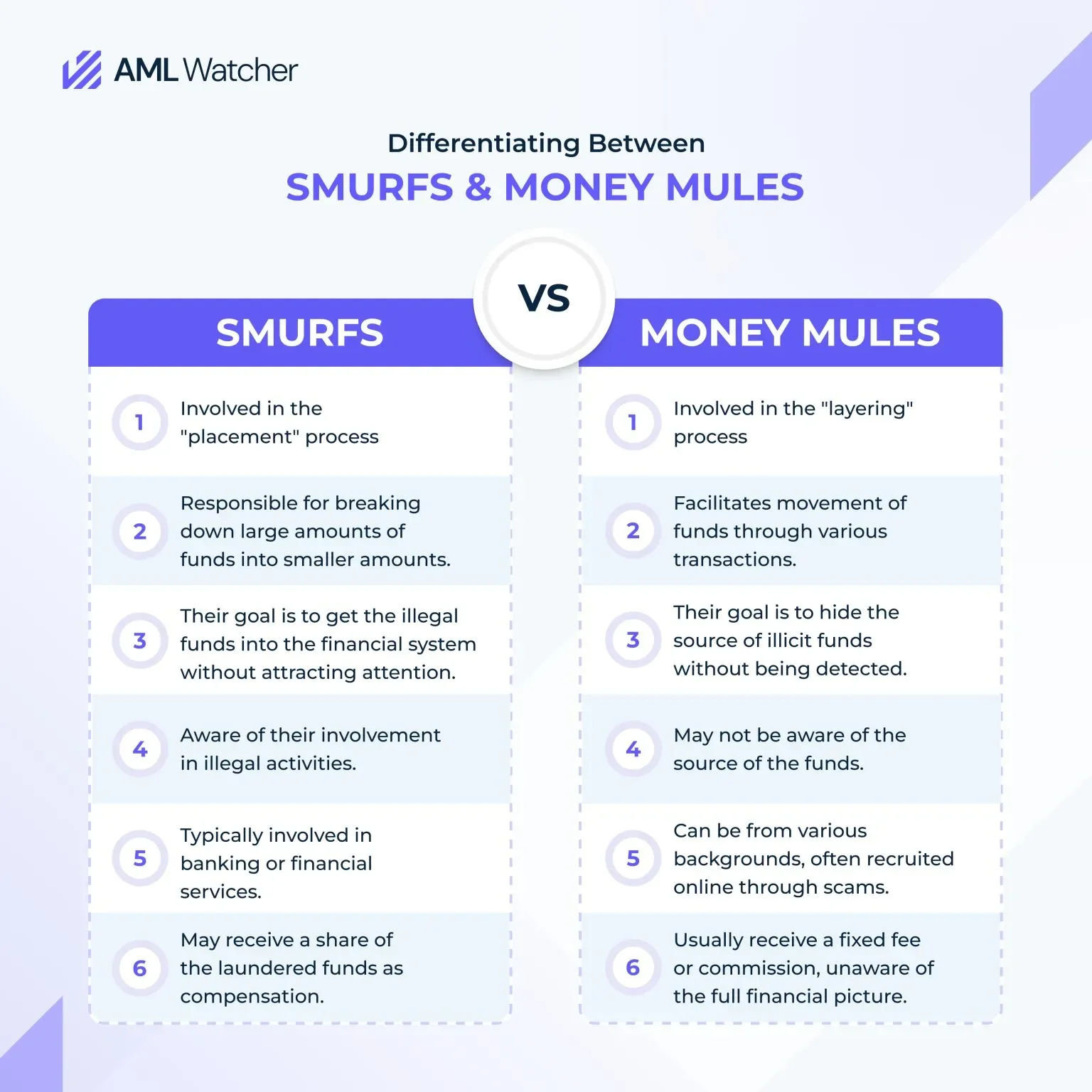
4) Smurfing: A criminal organization will often recruit a network of lower-level runners known as “smurfs.” These individuals travel across cities or regions making small, frequent cash deposits into various bank accounts—always keeping each transaction below the legal reporting threshold for that country (such as $10,000 in the United States). By repeating this process across multiple branches, accounts, and dates, a massive pool of illicit cash is quietly funneled into the banking system over time. However, this tactic carries risk: bank tellers are trained to spot suspicious deposit behaviors, and back-office compliance algorithms actively flag accounts showing irregular, repeated structured deposits.
5) Building Real Estate: Many contractors and subcontractors prefer to be paid in cash. A criminal with illicit funds could use that cash to pay them to build a home. Once the property is complete, selling or refinancing it allows the owner to inject legitimate funds directly into the banking system.

Stage 2: Layering
Even after funds enter the financial system, they remain highly suspicious. The primary objective now is to build a complex web of transactions, distancing the money from its criminal origins and making the audit trail difficult to follow.
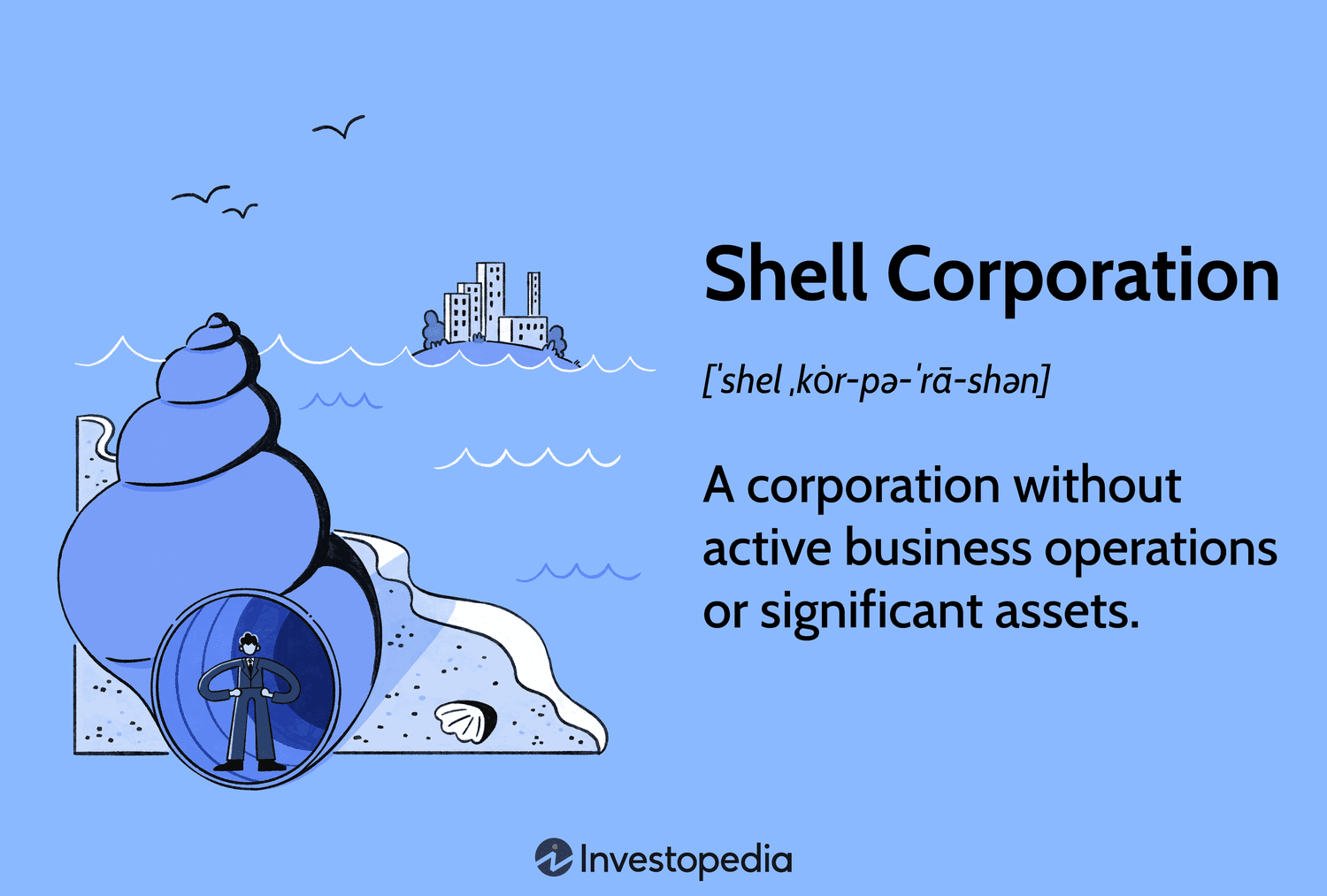
1) Offshore Shell Companies and Trade Based Money Laundering: Criminal organizations frequently create opaque shell companies across secrecy jurisdictions—such as the British Virgin Islands, the Cayman Islands, Panama, Dubai, Singapore, Hong Kong, or Switzerland. These entities exist largely on paper, allowing owners to hide behind nominee directors or anonymous trusts. Once set up, these shell companies issue fake invoices to one another for non-existent goods or intangible services, such as "management consulting fees" or "software licensing." Millions of dollars then move between corporate bank accounts under the guise of routine business-to-business transactions across different jurisdictions, creating a paper trail that obscures the money's true origins.
2) Cryptocurrency Mixing and Chain Hopping: Illicit funds can be converted into digital assets using physical cash or money that was recently deposited into bank accounts. Once in the crypto ecosystem, launderers use tactics to hide transaction histories. They may swap funds into privacy-focused cryptocurrencies or engage in "chain-hopping"—moving assets across multiple different blockchains to break the public ledger trail. Additionally, they often fragment large sums into smaller amounts, cascading the funds through a pyramid-like network of dozens or hundreds of digital wallets. This complex web makes it extremely difficult for blockchain analytics firms and law enforcement to trace the original source.

3) High-Value Tangible Assets: Purchasing easily transportable, subjectively valued assets—like fine art, luxury watches, or rare gems—allows funds to move across international borders without relying on traditional wire transfers. These assets can then be liquidated into a different currency once they reach a new jurisdiction.

Stage 3: Integration
The final stage brings the obscured money back into the legitimate economy, making it available to the criminal to spend, invest, or enjoy openly as "clean" wealth.
1) Commercial and Residential Real Estate: Real estate is one of the most common integration channels. A shell company controlled by a criminal buys a luxury property or commercial building. The criminal can either sell the property shortly afterward—collecting clean proceeds from the sale—or collect ongoing, legitimate rental income from tenants.

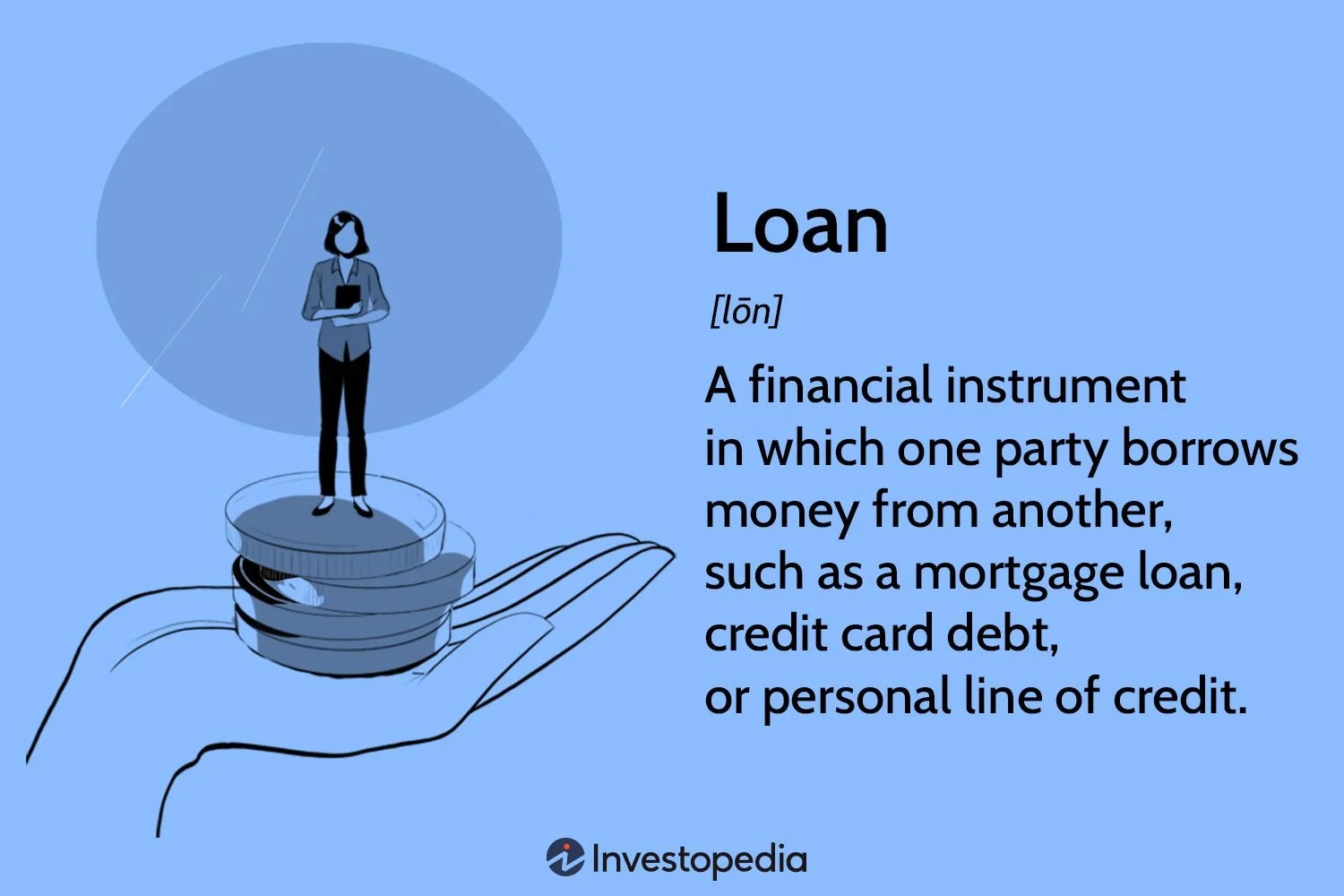
2) Back-to-Back Corporate Loans: A criminal deposits laundered money into an offshore account owned by their shell company. That offshore company then officially grants a "business loan" to a domestic company owned by the same criminal. The criminal can now legally inject these funds into local developments, pay themselves a corporate salary, or deduct interest payments on their taxes
3) Fake Employee Salaries: Criminal organizations put co-conspirators or front personnel on official corporate payrolls of real or ghost companies. The funds flow out as standard W-2 wages or director fees, giving the recipient a fully taxable, legally defensible income source.
Important note on points 1–3 in integration: Sometimes the assets, loans, and salaries are never in the name of the actual end beneficiary. Front people (nominees) could be the ones on paper handling everything.
The video below is an example of what happens above.
Major banks have been involved in money laundering for criminal organizations. Also, $1.92 billion in fines for a company like HSBC is a parking ticket or just the cost of doing business. There are some organizations and institutions in the world we live in that are to big to fail and in some cases, to big to jail.
Sources
General framework (placement, layering, integration)
Levi, Michael, and Peter Reuter. “Money Laundering.” Crime and Justice, vol. 34, no. 1, 2006, pp. 289-375.
Unger, Brigitte, and Daan van der Linde, editors. Research Handbook on Money Laundering. Edward Elgar Publishing, 2013.
United States, Department of the Treasury. 2024 National Money Laundering Risk Assessment. Treasury, Feb. 2024.
Trade-based money laundering (Placement #1, Layering #1)
Financial Action Task Force. Trade-Based Money Laundering. FATF, 23 June 2006.
Financial Action Task Force and Egmont Group. Trade-Based Money Laundering: Trends and Developments. FATF, Dec. 2020.
Naheem, Mohammed Ahmad. “Trade Based Money Laundering: Towards a Working Definition for the Banking Sector.” Journal of Money Laundering Control, vol. 19, no. 4, 2016, pp. 513-24.
Complicit bankers and cash-intensive front businesses (Placement #2-3)
United States, Department of the Treasury. 2024 National Money Laundering Risk Assessment. Treasury, Feb. 2024.
Federal Financial Institutions Examination Council. Bank Secrecy Act/Anti-Money Laundering Examination Manual. FFIEC, 2020.
Smurfing and structuring (Placement #4)
“Structuring Transactions to Evade Reporting Requirement Prohibited.” United States Code, title 31, sec. 5324.
“Reports of Transactions in Currency.” Code of Federal Regulations, title 31, sec. 1010.311.
Real estate (Placement #5, Integration #1)
Financial Action Task Force. Money Laundering & Terrorist Financing Through the Real Estate Sector. FATF, June 2007.
Shell companies and beneficial ownership (Layering #1, Integration #2)
Financial Action Task Force and Egmont Group. Concealment of Beneficial Ownership. FATF, July 2018.
Financial Action Task Force. Money Laundering Using Trust and Company Service Providers. FATF, Oct. 2010.
Financial Action Task Force. Professional Money Laundering. FATF, July 2018.
Cryptocurrency and chain hopping (Layering #2)
Financial Action Task Force. Virtual Assets: Red Flag Indicators of Money Laundering and Terrorist Financing. FATF, Sept. 2020.
High-value tangible assets (Layering #3)
Financial Action Task Force. Money Laundering and Terrorist Financing in the Art and Antiquities Market. FATF, Feb. 2023.
Financial Action Task Force. Money Laundering/Terrorist Financing Through Trade in Diamonds. FATF, Oct. 2013.